Markstein and Grand Ballon are two separate landmarks in the High Vosges of Alsace. Markstein is a resort and activity plateau on the Route des Crêtes. Grand Ballon is the highest summit in the Vosges massif, at 1,424 metres.
Knowing the difference helps you choose the right route, activity and opening bulletin.
⚠ Tour de France — 18 July 2026: major access restrictions
Check Inforoute Alsace before travelling. For stage 14 from Mulhouse to Le Markstein Fellering, access to Markstein via Grand Ballon (RD431) and Kruth (RD27) will be closed from Friday 17 July at 7 pm until Saturday 18 July at 10 pm. Motor-vehicle traffic and parking at the Markstein summit will be prohibited, except for authorised vehicles and services. Progressive closures are announced from 15 July. The Collectivité européenne d’Alsace recommends planning ahead or postponing an activity scheduled at the site on 18 July. Read the official restrictions and updates.
Markstein or Grand Ballon: two different places
Markstein, a resort and activity plateau
The official website places Markstein between 1,020 and 1,268 metres, on the Route des Crêtes. It is a winter and summer sports resort. The operator lists hiking, road cycling, mountain biking, e-MTB, gravel riding, paragliding, rail toboggan and mini-golf among its activities.
Grand Ballon, the 1,424-metre summit
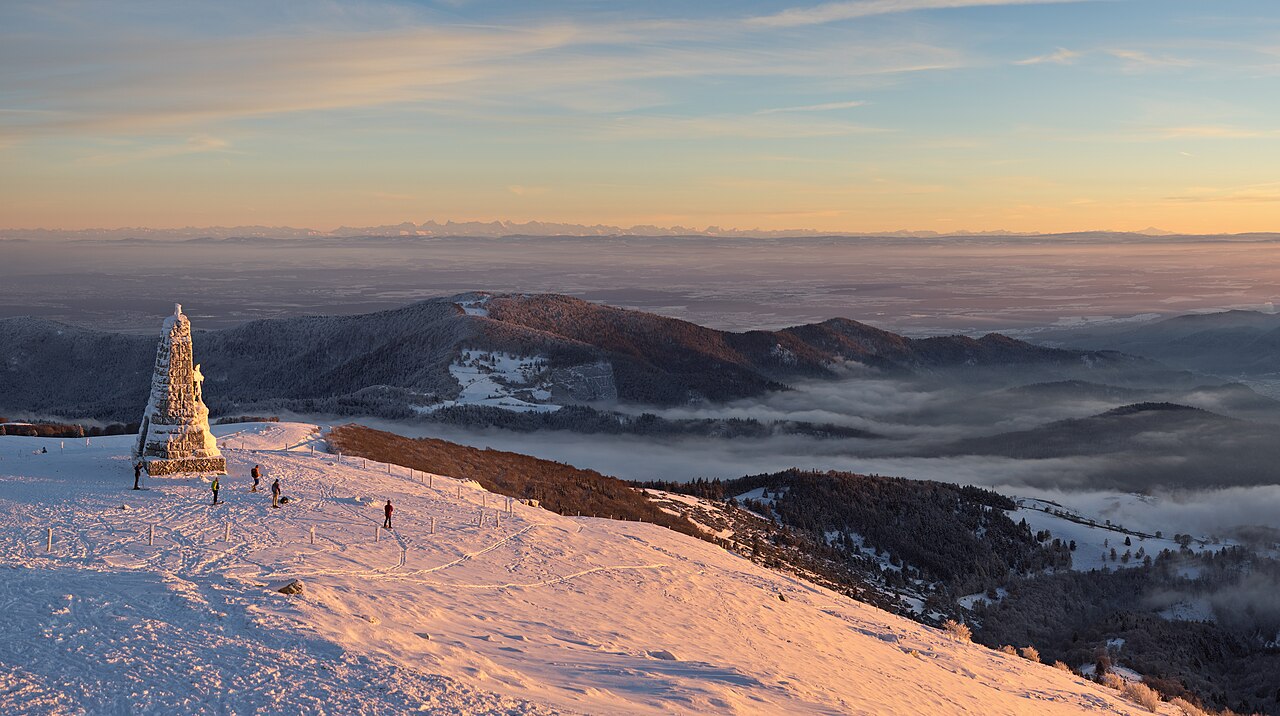
Grand Ballon is the highest point in the Vosges massif. Its summit has the Diables Bleus monument, a civil-aviation radome and an orientation table beneath the radome. Visibility depends on the day’s conditions, so check the mountain forecast before setting out.
The name “Grand-Ballon” is also used for an alpine ski area on its slopes. In winter, make sure the bulletin you read covers Markstein, the Nordic area or the Grand-Ballon alpine area.
Planning a summer visit to Markstein
As of 15 July 2026, the operator advertises the rail toboggan and mini-golf from 1 July to 31 August, 10:30 am to 6:30 pm. Hours may change with the weather, and the ticket office closes fifteen minutes before the final ride. Check the official Markstein website on the intended date.
For hiking, the operator points visitors to a network of trails marked and maintained by Club Vosgien. A guide to four family walks around Markstein is also available. Select a route from the official hiking page instead of relying on an undated distance or duration.
Before leaving:
- check the weather, opening information and road conditions;
- carry water, suitable footwear and a layer for wind or rain;
- follow waymarks and adapt the route to current conditions;
- do not build the day around an assumed drive time or parking space.
Route des Crêtes: opening and closures
The tourist office describes the Route des Crêtes as 77 km long and says its route was decided during the First World War for strategic purposes. It passes Grand Ballon, Hohneck and Col de la Schlucht.
The road is not open to traffic throughout the year. The official listing says it closes from mid-November for the winter period, without giving a fixed reopening date on that page. Events, works and weather can create additional restrictions.
Check current road information before leaving La Bresse. Our Route des Crêtes guide helps you choose stops, but road-manager information takes priority.
Road cycling, mountain biking and gravel
The Markstein operator lists mountain biking, e-MTB, gravel riding and road cycling. It does not publish one standard profile from La Bresse on that page: distance, elevation gain and difficulty depend on the selected start and route.
Use a verified route from our Vosges mountain-bike guide or gravel loops from La Bresse. Check closures before riding towards the ridge roads.
Markstein and Grand Ballon in winter
The official website separates the Markstein alpine bulletin, the Grand-Ballon alpine bulletin and the Markstein–Grand-Ballon Nordic bulletin. It lists alpine skiing, cross-country skiing and snowshoe routes, but opening depends on snow and weather conditions.
Hours, slopes and prices can change between seasons. Check the bulletin for the specific area before travelling rather than inferring that every sector has the same status.
Extending the day from La Bresse
Restaurants and farm inns are among the services listed around the massif. Check opening days directly with each business and use our farm-inn guide around La Bresse.
For another ridge outing on the Vosges side, read our Hohneck hiking guide. Combine several summits only when weather, traffic and available time make the plan realistic.
The 2026 La Bresse guide, ready to download
Access, activities, hikes and useful addresses in one free PDF.
Your details are used only to process this request. Privacy policy (in French).
Free PDF, no newsletter sign-up.
Frequently asked questions
What is the difference between Markstein and Grand Ballon?
Markstein is a winter and summer sports resort on the Route des Crêtes, between 1,020 and 1,268 metres. Grand Ballon is the highest summit in the Vosges massif, at 1,424 metres.
Is the Route des Crêtes open to Grand Ballon throughout the year?
No. The official Route des Crêtes listing states that the road closes to traffic from mid-November for the winter period. Temporary restrictions may also apply, so check road conditions on the day of travel.
What can you do at Markstein in summer?
The official operator lists hiking, rail toboggan, mini-golf, mountain biking, e-MTB, gravel riding, road cycling and paragliding. Opening depends on the calendar and weather.
Which winter activities are listed?
The official website lists alpine skiing, cross-country skiing and snowshoe routes. Opening depends on weather and must be checked in the bulletin for each area.