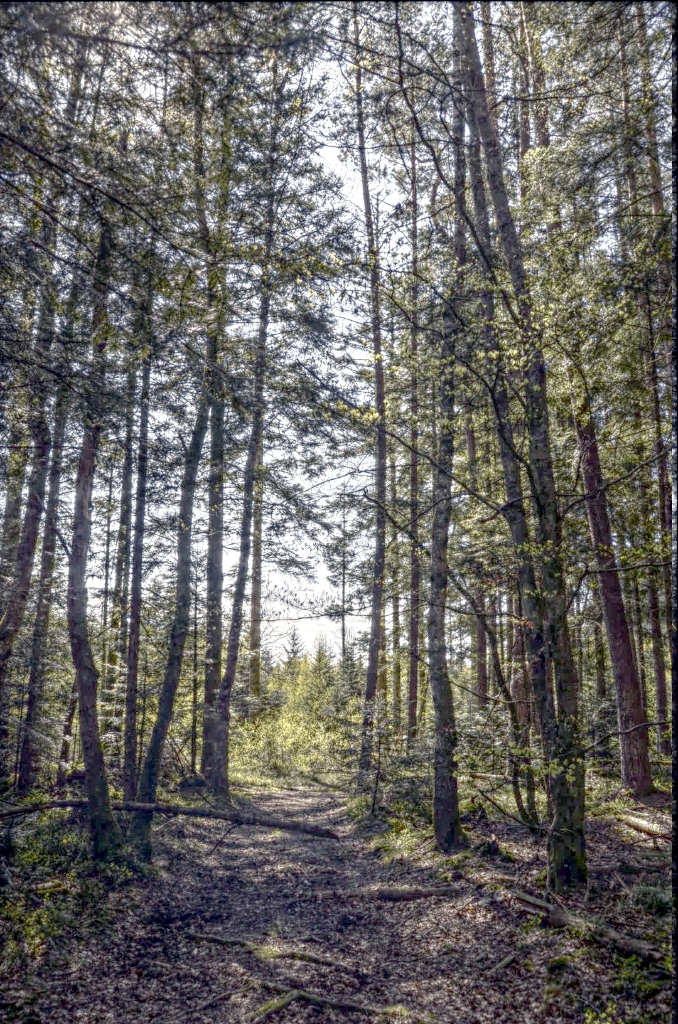
Watching forest wildlife near La Bresse is not about reaching a “spot” where an animal is guaranteed. Wild animals are discreet and unpredictable. A respectful outing instead relies on reading signs, watching from a distance and choosing a route independently of any promise of a sighting.
Forest wildlife is distinct from ridge wildlife
The Ballons des Vosges Regional Nature Park documents mammals, birds and amphibians in the Vosges forests. From a path, you may notice a print, disturbed soil, a feather, a call or drumming. Such signs are often insufficient for a certain identification: binoculars and an identification guide are more useful than leaving the trail to get closer.
This page focuses on forest habitats and responsible watching. For searches about the ridges, use our separate guide to chamois, red deer and the marmot myth in the Vosges. It explains why the Hohneck and Frankenthal should not be presented as marmot-watching sites.
Read signs without following animals
A walk can be rewarding without a direct sighting. From your route, you can:
- examine a track without leaving the path to follow it;
- listen to birds without trying to reach a nest;
- watch a mammal through binoculars without closing the distance;
- slow down if an amphibian is on the path, without touching or moving it.
France’s National Forest Office, the ONF, warns that getting too close can change an animal’s behaviour and become dangerous. It also asks visitors not to feed wildlife or touch young animals. A photograph or a clearer view does not justify a chase or a detour beyond the marked route.
The five Quiétude Attitude habits
The Ballons des Vosges Regional Nature Park recommends five habits:
- check quiet areas and their regulations before leaving;
- stay on marked routes in those areas and favour marked paths elsewhere;
- respect nature’s silence;
- keep dogs on a lead while checking any site-specific prohibition;
- choose daytime activities.
These habits protect animals’ need for quiet and avoid turning one walk into repeated disturbance.
Why a daytime outing is preferable
The Park explains that wildlife is used to quiet at night and is especially active at dawn and dusk while feeding. Responsible wildlife watching therefore takes place by day, on an existing route, without a night watch or torch-led search.
Choose a walk for its suitability to the group, weather and terrain. Our car-free walks from La Bresse present official routes served by the summer shuttles. Any animal sighting should remain a bonus, not a reason to leave the route.
Quiet areas: check the rule for each site
Restrictions are not identical throughout the Park. Some quiet areas and protected sites have strict or seasonal rules; general good practice applies elsewhere. Check the Quiétude Attitude map before leaving, then follow the signs you find on site.
Our Ballons des Vosges Regional Nature Park guide explains the Park’s scope and purpose. It does not replace the rules for the area you are visiting.
Respectful wildlife-watching checklist
- go out by day on a marked route;
- take binoculars instead of trying to get closer;
- keep your distance and do not pursue an animal;
- do not feed, touch or move wildlife;
- do not pick up a young animal that appears to be alone;
- check sensitive areas and local signs;
- accept seeing nothing: an encounter cannot be expected in a wild habitat.
The La Bresse guide, summer edition
Trails, lakes, blueberries and farm inns, in one free PDF.
Your details are used only to process this request. Privacy policy (in French).
Free PDF, no newsletter sign-up.
Frequently asked questions
Which animals might you notice in forests near La Bresse?
The Park documents varied forest wildlife, including mammals, birds and amphibians. A sighting cannot be predicted: look for signs visible from a marked route instead of relying on a promised spot.
When should you watch wildlife without disturbing it?
The Park recommends daytime activities. Night, dawn and dusk should remain quiet periods for wildlife.
Can you touch a salamander or move a young animal?
No. Watch without touching, moving or handling the animal. Keep your distance and let it continue on its way.
Do the same restrictions apply throughout the Park?
No. Some quiet areas and protected sites have specific rules. Check the official map before setting out and follow signs on site.