
Perched at 778 m above Éloyes, the Tête des Cuveaux is a walk much loved by the people of Remiremont and around. Exceptional panorama over the Moselle valley and the Vosges summits.
Classic route
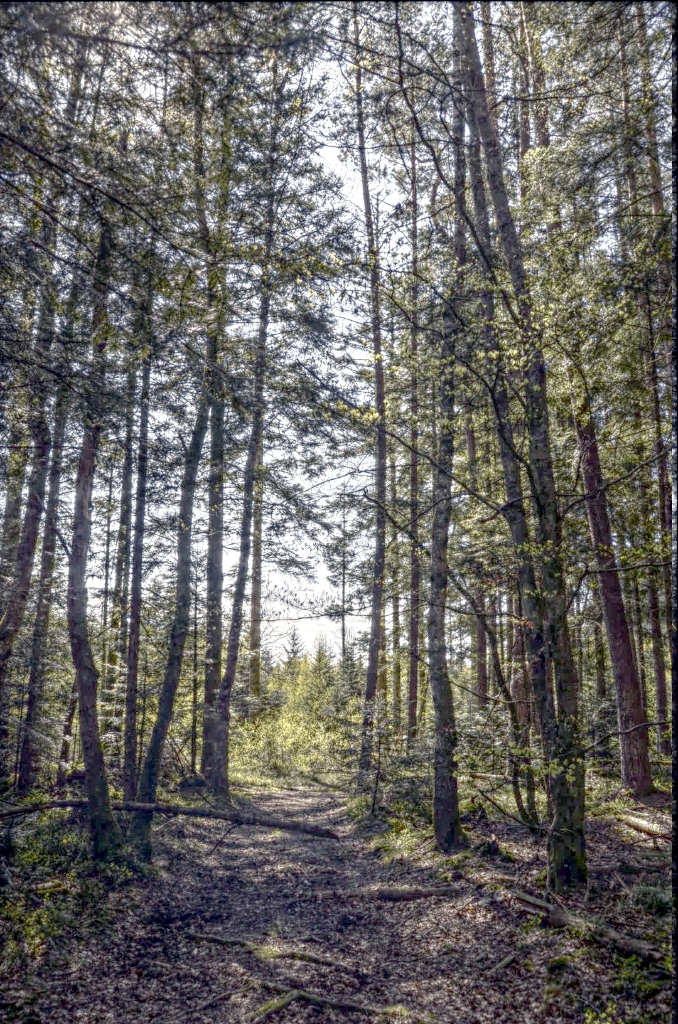
Start from the Éloyes car park, steady climb along a well-marked forest path. Arrival on an open plateau with an orientation table and several viewpoints.
Car access restricted in August 2026. A notice from the commune of Éloyes published on 31 July 2026 bans the access, movement and parking of any motor vehicle on all roads, tracks and paths of five communal forest massifs, including the Haut des Cuveaux, until 15 August 2026 inclusive. Reason: fire risk rated severe across the Vosges and drought recorded on the municipal territory. Public service vehicles (emergency, security, ONF) and people reaching their own property remain exempt. Check the current status with the Éloyes town hall before setting off by car.
- Distance: 9 km round trip
- Elevation: 450 m
- Duration: 3 to 4h
- Level: moderate
The Kiener tower
At the summit, a 14-metre observation tower widens the panorama further, with a view of the Hohneck on clear days. On the clearest days you can see as far as the Swiss Alps on the horizon.
Geology of the site
The Tête des Cuveaux is a typical Vosges butte of the sandstone and granite foothills of the massif. The rocks visible at the surface mostly belong to the crystalline basement (Hercynian granites) and the Vosges sandstones, formed some 280 to 300 million years ago during the Permian period. This very ancient basement was gradually eroded by Quaternary glaciers around 15,000 to 20,000 years ago, shaping the rounded relief characteristic of the southern Vosges. Lichen-covered rock outcrops scattered across the hillside are testaments to this long geological history.
Remarkable flora
The trail crosses several vegetation zones. In the mountain forest (between 400 and 650 m), the beech-fir mix dominates: centuries-old beeches, silver firs, moss-covered floors. Higher up, bilberry bushes (Vaccinium myrtillus) carpet the open heathland: in July and August, the blue berries are abundant and free to pick. Bracken ferns form large colonies in sunny clearings, reaching 1.5 m in summer. Also found along the path: wood sorrel in the shaded sections, and marsh horsetail in wetter zones.
Wildlife
The fauna is present but discreet. Arriving early in the morning (before 8am) significantly increases your chances of spotting:
- Deer: at dawn, in meadow edges along the forest. The rutting calls in September and October can be heard from the path
- Foxes: active at dusk, often seen in forest clearings and felling zones
- Common buzzards: regularly soaring above the summit plateau
- Black woodpeckers: their resonant drumming echoes through the beech forest in March and April
- Roe deer, wild boar and pine martens complete the picture, less easily observed
Variant from Raon-aux-Bois
For a more forested and less frequented itinerary, it is possible to start from the hamlet of Raon-aux-Bois, a few kilometres from Éloyes. This variant follows shaded ridge paths under a canopy of beeches and firs before rejoining the classic route halfway. Count around 11 km round trip for a similar elevation gain. The atmosphere is wilder, the paths narrower, and the chances of meeting other walkers are considerably lower. Ideal for those who enjoy solitude and woodland.
Photography
The site is an excellent photographic spot with the right timing:
- Best light: morning light (7:30 to 9:30am) illuminates the Moselle valley in warm contre-jour. Misty autumn valleys produce spectacular images.
- 180° panorama towards Remiremont: from the main viewpoint, the arc covers the Moselle valley, the rooftops of Remiremont, the Vosges massifs as far as the Hohneck, and on very clear days the Swiss Alps.
- Recommended equipment: wide-angle (16-24 mm) for panoramas, telephoto (200-400 mm) for wildlife at dawn.
- The sunset is also beautiful but the Kiener tower closes in the evening.
In winter
The Tête des Cuveaux remains walkable in winter in good conditions:
- The trail is not specifically waymarked for winter: use a map or GPS app
- With 10 to 30 cm of snow: good walking boots with grip soles or micro-crampons are generally sufficient
- For deeper or icy snow: light snowshoes recommended (rental available in La Bresse or Remiremont)
- The snow-covered forest offers a magnificent setting, and animal tracks are clearly visible in fresh snow
Eating after the hike
Several options nearby:
- Restaurants and inns in Éloyes: traditional Vosges cuisine, accessible lunch menus. Less than 5 minutes by car from the car park.
- Remiremont (15 min): wider choice, bakeries, brasseries, restaurants. Worth stopping before or after the hike to visit the famous arcaded Rue Charles de Gaulle.
- Back to La Bresse (30 min by road): several dining options in the village to round off the day.
Accessibility
The Tête des Cuveaux is not accessible to people with reduced mobility: 450 m of positive elevation on an unmade forest path excludes any wheelchair or standard pushchair. In normal times, the lower viewpoint on the forest road above Éloyes is reachable by car and already offers a fine view over the valley with no physical effort required. That fallback is suspended until 15 August 2026 inclusive: the Éloyes notice of 31 July 2026 closes the communal forest roads to motor vehicles.
Good to know
- Shaded trail, pleasant even in hot weather
- Picnic at the top, wooden tables
- Alternative start from Raon-aux-Bois for a different, more forested route
Combine with
- Visit Remiremont at the end of the day
- Lunch at a local inn
- Back to La Bresse in 30 minutes by car
An excellent idea to step out of La Bresse and discover the Vosges foothills.
Book your chalet in La Bresse as your base for exploring the whole sector.
The La Bresse guide, summer edition
Trails, lakes, blueberries and farm inns, in one free PDF.
Your details are used only to process this request. Privacy policy (in French).
Free PDF, no newsletter sign-up.
Frequently asked questions
Is the hike family-friendly?
Yes from 6-7 years old. The trail climbs steadily with no technical section. Count 3 to 4 hours round trip with breaks.
How to reach the starting point?
The Éloyes car park is 30 minutes by car from La Bresse via Remiremont. The trail is signposted from the first bends above the village. Since a town notice of 31 July 2026, motor vehicles are barred from the roads and paths of five communal forest massifs, including the Haut des Cuveaux, until 15 August 2026 inclusive: check with the Éloyes town hall before driving up.
Is there a shelter at the top?
No proper refuge, but wooden tables, an orientation table and the Kiener tower offer some wind cover. No water on the route: bring enough.
Is the summit tower open?
Yes, the Kiener tower is freely accessible year-round, weather permitting. 14 metres high, it widens the panorama towards the Hohneck.