
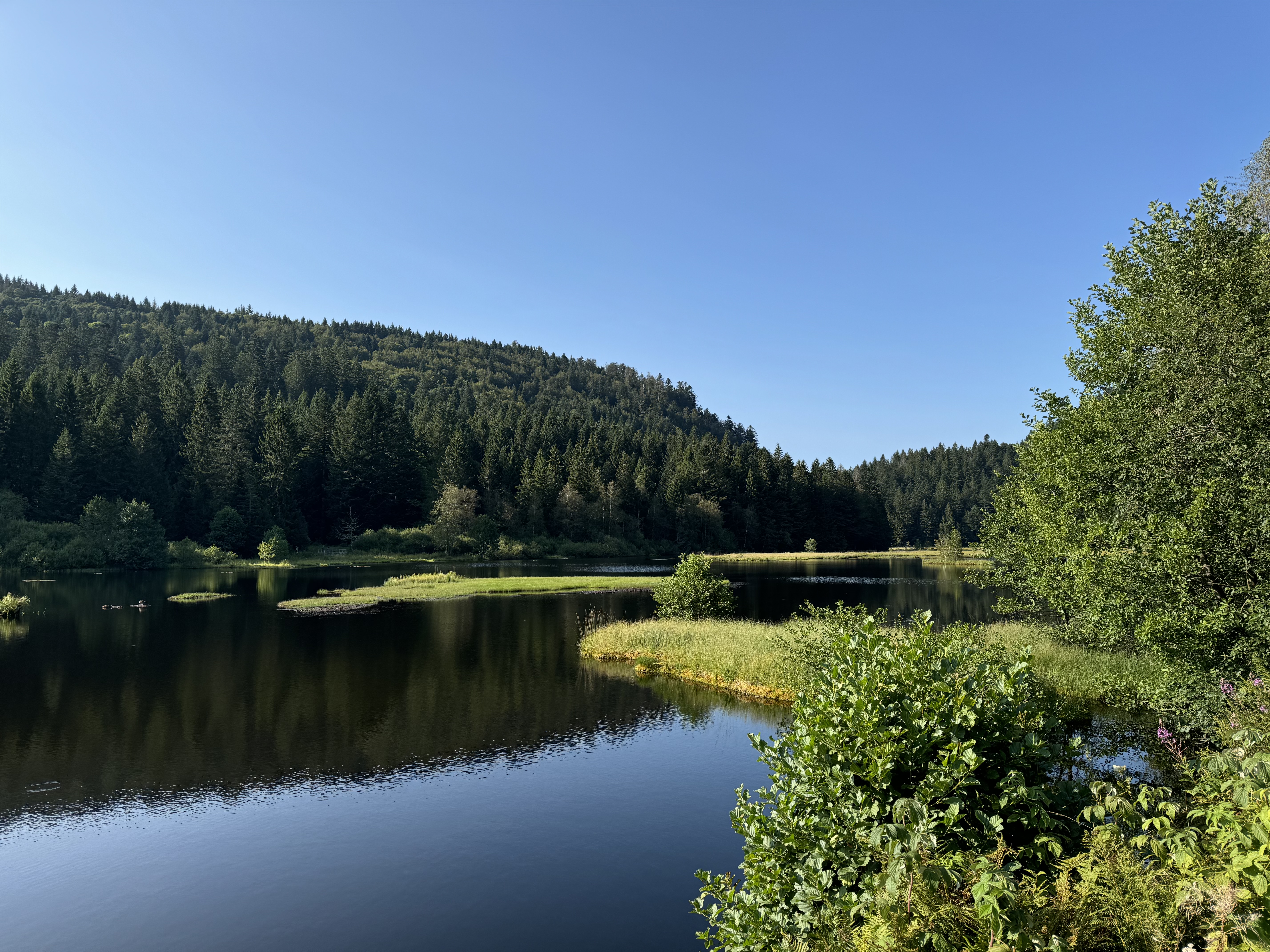
The high pastures of the High Vosges harbour a high-altitude flora inherited from the last glaciations. From June to August, the summit lawns are covered in rare and protected flowers. Here are the emblematic species to recognise around La Bresse.
The stars of the high pastures
Alpine pasqueflower
The big silky white flower of May and June, followed by silvery plumes in summer. Very common on the Hohneck and Kastelberg.
Mountain arnica
Intense yellow daisy of July, a famous medicinal plant. Protected, its picking is regulated.
Yellow gentian
Tall stem 50 to 150 cm, yellow flowers in a crown. Root harvest regulated for liqueur making.
Sulphur anemone
Pale yellow flower of the high pastures, late May to July. Spectacular carpet bloom on exposed slopes.
Vosges pansy
Endemic to the massif, a small purple and yellow pansy. Botanical symbol of the park.
Plants of the peat bogs
The peat bogs of Tanet, Frankenthal and Lispach host a unique flora:
- Sundew: tiny carnivorous plant
- Cottongrass: white cottony tufts in June
- Cranberry: small acidic fruit in October
- Bogbean: pale pink bloom in spring
To visit the peat bogs while respecting the flora, see our dedicated guide Vosges peat bogs.
Plants of the undergrowth
- Foxglove: tall pink stem, edges and clearings
- Monkshood: blue-violet flowers, highly toxic, never touch
- Martagon lily: rare, in July, under beech
- Honesty (Pope’s money): violet pink, in light undergrowth
Flowering calendar
- May: poet’s narcissus, pasqueflowers
- June: sulphur anemones, spring gentians
- July: arnica, Vosges pansy, Martagon lily
- August: yellow gentian, asters, knautia
- September: autumn crocus, heather
Good to know
- Stay on trails, trampling destroys the flora in a few years
- Photograph rather than pick
- No picking in the Tanet Gazon du Faing nature reserve
- Avoid drones near nesting birds in spring
- Bring an identification guide or use the PlantNet app
Recommended botanical walks
- Sentier des Roches: one of the richest in Europe for high-altitude flora
- Tour of the Hohneck via the high pastures
- Tanet discovery trail
- Lispach peat bog on boardwalk
Plan your botanical stay
June and July are the peak months for alpine flower lovers. Discover our chalets in La Bresse at the foot of the trails, and combine with a Hohneck hike for full immersion.
The La Bresse guide, summer edition
Trails, lakes, blueberries and farm inns, in one free PDF.
Your details are used only to process this request. Privacy policy (in French).
Free PDF, no newsletter sign-up.
Frequently asked questions
When do the alpine flowers of the Vosges bloom?
From late May to late August depending on species and altitude. Peak in June and July on the high pastures above 1,200 m.
Can you pick wild flowers?
Picking is forbidden in the reserves and limited elsewhere. Several species are protected (arnica, gentian, pasqueflower).
Where can you see the finest blooms?
High pastures of the Hohneck, Kastelberg, Rainkopf and the Tanet Gazon du Faing peat bogs. The Sentier des Roches offers an exceptional range.
Is arnica protected?
Yes, its harvest is regulated or even banned depending on the commune. Commercial harvest requires a permit.
Which identification guide should you choose?
The Delachaux guide to Alpine flowers, or the fact sheets from the Parc naturel régional des Ballons des Vosges, available online.