
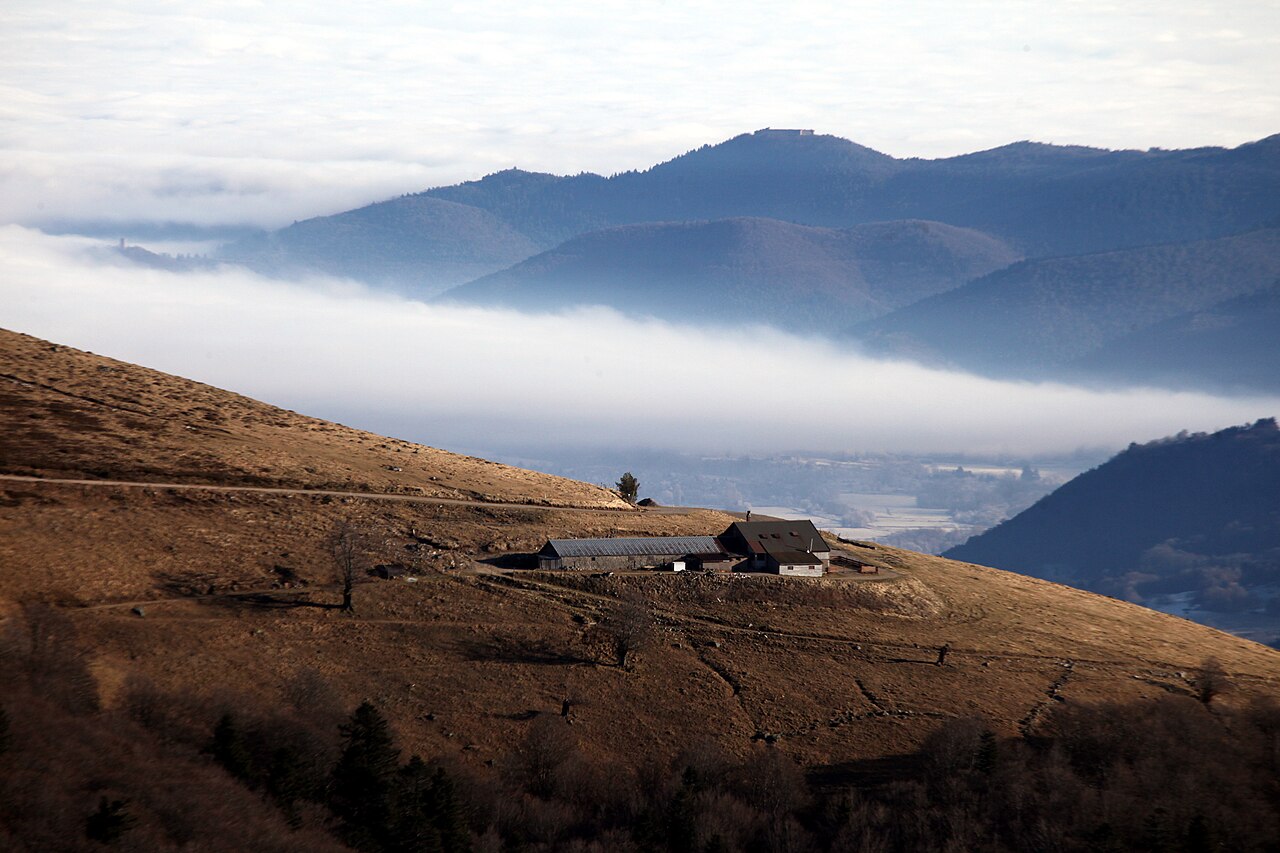
Eating at a ferme auberge is touching the soul of the Vosges. Farming families open their dining room to serve the ancestral cooking of the chaumes (high pastures), with produce from their own farm.
The history of the marcaires: the Vosges transhumant herders
To understand the Vosges ferme auberge, you have to go back to the marcaire tradition, which dates to the 13th century and still shapes the peasant culture of the massif today.
The word “marcaire” comes from the Alsatian “Märker”, designating the herders who practised summer transhumance in the Vosges. Each spring, herds of cattle moved up to the chaumes (high altitude grasslands) where the rich, abundant grass produced milk of exceptional quality. Marcaires lived on these heights throughout the warm season, in chalets called “marcairies”.
Their daily life: milking the cows twice a day, making butter, cream and cheese (including munster), and managing the herds across kilometres of pasture. In autumn, they came back down to the valleys with their animals and their stores of aged cheeses.
Marcaire cooking was born of this life of hard work at altitude: nourishing dishes, rich in protein and energy, designed for outdoor workers. The savoury pie, smoked meats, tofailles (potatoes pan-fried in butter), hot munster and blueberry tart are the pillars of the marcaire meal that you find today in the fermes auberges.
The ferme auberge label: precise criteria
The term “ferme auberge” is governed by an official label that distinguishes genuine farming establishments from mere restaurants with rustic decor.
Label criteria:
- A minimum percentage of homemade or local produce on the plates. The farm must produce at least some of the raw materials itself (milk, cheese, meat, vegetables, fruit).
- A food safety approval delivered by the departmental authority, which inspects hygiene conditions for both production and catering.
- A minimum number of covers served per year to justify a real, not accessory, catering activity.
- The farm must be an active agricultural operation (livestock, crops) and not solely a restaurant.
These criteria are regularly monitored. An establishment that no longer meets them can lose its label.
How to find a genuine ferme auberge
Fake “rustic restaurants” are common. To find genuinely labelled fermes auberges:
- fermes-auberges.fr: the official site of the National Federation of Fermes Auberges. Complete directory with filters by department and type of production.
- Bienvenue à la Ferme: national agricultural tourism network. Listed fermes auberges have signed a quality charter.
- The La Bresse tourist office maintains an up-to-date list of recommended fermes auberges around the village, with contact details and opening days.
Be wary of general online booking platforms for this type of establishment: genuine fermes auberges do not usually appear on them.
1. Ferme auberge du Rothenbach
On the Route des Crêtes, between the Col du Calvaire and the Hohneck. Stunning view, full marcaire menu around 28 €. A must, book well ahead.
2. Ferme auberge du Kastelberg
Near Mittlach, reachable on foot from the Col de la Schlucht. Family atmosphere, outstanding homemade cheese and meats.
3. Ferme auberge du Hohneck
Right at the summit. Wild panorama, more touristy service but cooking still faithful to tradition.
4. Ferme auberge des Buttes
La Bresse side, car access. Less known, much loved by locals. Unbeatable homemade blueberries in July and August.
5. Ferme auberge du Firstmiss
Next to the Markstein. Generous and honest cooking, great terrace in summer.
Children at a ferme auberge
The ferme auberge is an ideal place for families with children. Often more than the meal itself, it is the contact with the animals that children remember.
Many fermes auberges allow you to see the cows in the barn before or after the meal. Some offer the chance to watch the evening milking (generally between 5pm and 6:30pm), a fascinating moment for city children who have never seen how milk is produced. Ask on arrival if this is possible.
Pigs, chickens and rabbits are often present on the farms. Children can feed some of the animals. This educational dimension is one of the great strengths of the ferme auberge over any other restaurant.
On the food side: portions are generous. For children, ask for a half portion or share with them. Fermes auberges are generally very welcoming towards children and adapt without difficulty.
How to book: the specific rules
Booking a ferme auberge does not work like a normal restaurant.
By phone, always. Small fermes auberges do not appear on Booking, TripAdvisor or TheFork. You need to call directly. Numbers are available on the specialist sites listed above or from the tourist office.
Minimum notice: plan a call at least 48 hours ahead for a weekday lunch, and at least a week ahead for weekends in high season (July-August, Christmas and February holidays).
What to confirm on the phone: the number of people, whether children are present (adjusted portion), any allergies or dietary restrictions. The farmer often prepares the exact quantity of food based on bookings: cancelling the day before if something comes up is an essential courtesy.
Products to buy on site
After the meal, the shop (often informal, on a table or in a back room) allows you to leave with exceptional produce:
- Farm butter: yellow, dense, with an infinitely richer flavour than industrial butter. Keeps one week refrigerated.
- Fresh cream: thick, slightly tangy. For tartiflettes, sauces or simply on strawberries.
- Raw milk: some farms sell raw milk if authorised. Consume within 2 to 3 days, boil before giving to young children.
- Homemade aged cheeses: young or mature munster, goat’s cheeses, local tommes. Home ageing produces characters very different from industrial production.
- Jams and jellies: bilberries, damsons, raspberries from the farm gardens. Often in limited quantities.
Good to know
- Fixed menu usually, no à la carte
- Payment often cash or cheque
- Tasting and sale of farm produce on site
- Sleeping on site possible at some fermes
Pairings
The marcaire menu calls for a craft Vosges beer or a chilled pinot gris. Avoid heavy wines that would flatten the munster.
Around your stay
Planning a Vosges gastronomy trip? See chalets in La Bresse: ideal base for exploring the fermes auberges of the Hautes Vosges.
Frequently asked questions
What's a marcaire meal?
The marcaire meal is the cooking of the Vosges high-pasture herders (marcaires): savoury tart, smoked meat with tofailles (pan-fried potatoes), cumin munster and blueberry tart.
Do I need to book?
Yes, pretty much mandatory on weekends and in season. Some fermes only serve on phone reservation, often 48 hours ahead.
How much does a meal cost?
The full marcaire menu costs around 28 to 35 € per person. Single fixed menu in most places, no à la carte. Payment often cash or cheque.
Can I sleep at a ferme auberge?
Yes, some fermes offer rooms or dormitories. Simple comfort, fair price (50 to 80 € per person half-board). Book well ahead in summer.
Are they open all year?
Most high-pasture fermes only open from May to October (chaumes season). A few lowland ones stay open year round. Always check before setting off.