Snowshoeing is probably the most accessible and contemplative activity around La Bresse. Here are five loops for every level.
1. Lispach peat bog loop (easy)
3 km loop, around 1 hour, almost flat. Perfect with kids. Start from the Lispach domain car park, crossing the protected peat zone, views of the ridges.
2. Lac des Corbeaux in white (easy)
From La Bresse centre, climb up to the lake then loop around it. 5 km, 2 hours, 150 m elevation. One of the finest spots in the massif when the lake is frozen and edged by snow-laden firs.
3. Le Haut Chitelet (moderate)
Start from the Route des Crêtes, loop through the high meadows. 7 km, 3 hours, 200 m elevation. Constant panoramas.
4. Lac de Blanchemer (moderate)
Access from the Cornimont road. 5 km loop, 2h30. Deep forest then the lake in its setting.
5. Hohneck ridge tour (strenuous)
Sporty route, 4 hours, 400 m elevation. Exposed ridges, avoid in bad weather. 360° views over Alsace and the Grand Est.
Choosing your snowshoes
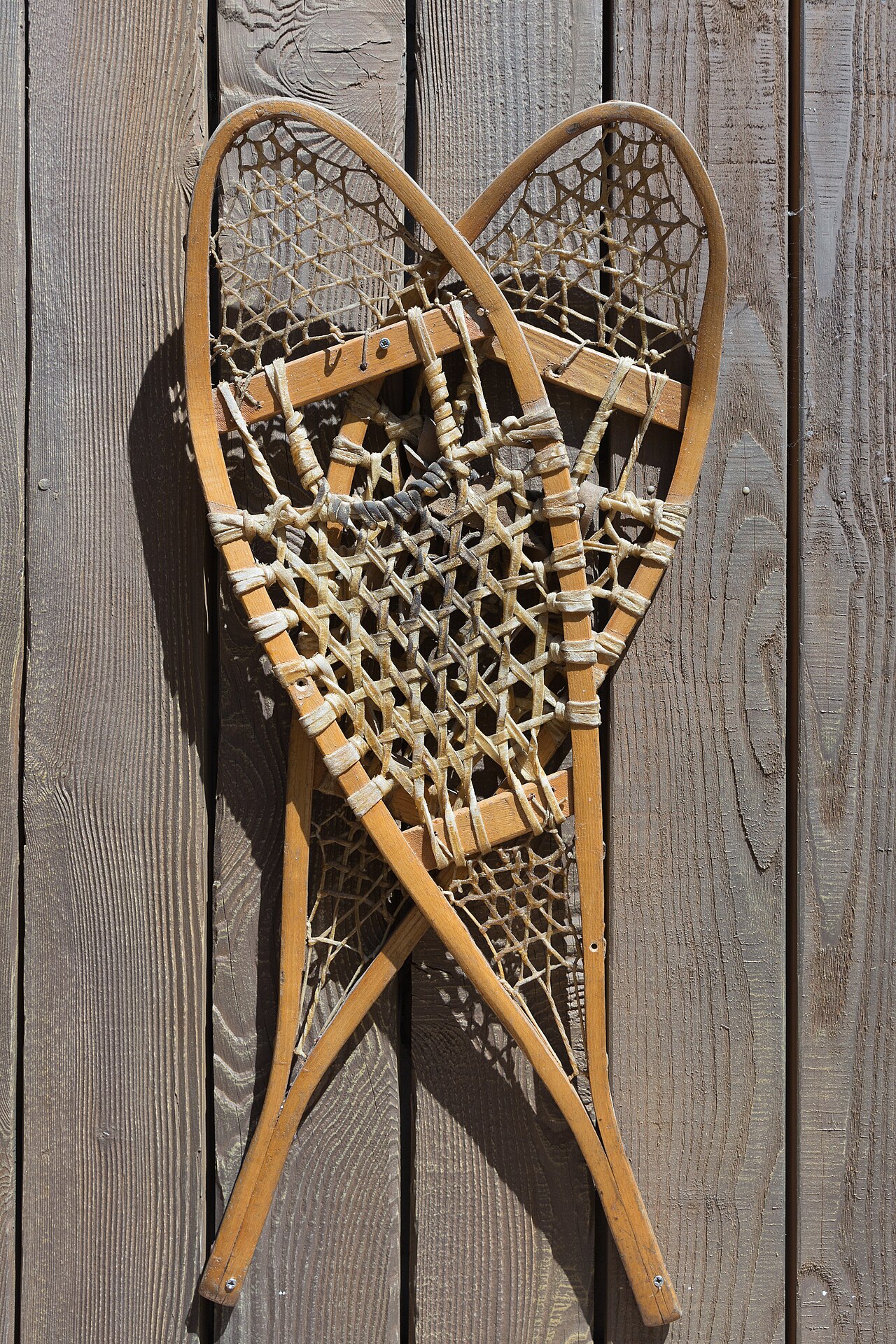
Not all snowshoes are equal. Here are the criteria to know before renting or buying:
Plastic vs aluminium:
- Plastic snowshoes are light and robust, ideal for forest paths and gentle terrain. Less rigid, they can deform on very hard ground.
- Aluminium frame snowshoes offer better rigidity and more bite on icy slopes. Recommended for moderate to strenuous loops such as the Hohneck ridges.
Size by weight: snowshoe size is chosen according to the hiker’s weight (including gear). As a general rule, between 50 and 80 kg, standard 25 x 70 cm snowshoes work well. Above 90 kg with a pack, go for 28 x 75 cm models for better flotation.
Trail vs mountain snowshoes: trail snowshoes are small and light, suited to beaten paths and compact terrain. Mountain snowshoes (wider, with crampons under heel and toe) are needed as soon as you leave marked paths for virgin or steep terrain.
Telescopic poles: why they are essential
Poles are not optional with snowshoes. They serve to:
- Balance on uneven or steep terrain
- Protect your knees on descents (significantly reducing fatigue)
- Push off in deep snow to avoid sinking
Height adjustment: a simple rule. Hold the pole planted in the snow beside you and check that the elbow forms a 90-degree angle. Shorten slightly on ascent (5 to 8 cm), lengthen on descent. Most telescopic poles adjust in seconds.
Snowshoeing with children
Snowshoeing is one of the most family-friendly winter activities:
From what age? Children’s snowshoes exist from age 4-5. Below that, a pulka (sled pulled by parents) or a suitable backpack carrier is better.
Suitable models: children’s snowshoes are smaller (15 to 20 cm wide), light and fitted with simple clip-on bindings. The main rental shops in La Bresse stock them from 4 to 6 euros a day.
Maximum duration by age:
- 4-6 years: 45 minutes to 1 hour on flat terrain, with breaks
- 6-10 years: 1h30 to 2 hours on an easy loop (peat bog tour, Lac des Corbeaux)
- 10 and over: same conditions as adults on moderate loops
Bring a reward at the end of the route (hot chocolate at the chalet, gingerbread cake) to motivate the youngest on the last stretch.
GPS navigation on snowshoes
Recommended apps:
- Komoot: downloadable GPX tracks, topographic maps, elevation profiles. Works offline.
- Visorando: French hiking database, with filters by level and duration.
- AllTrails: international community, many reviews and recent photos of routes.
GPX tracks: the La Bresse tourist office provides downloadable GPX tracks for the main snowshoe itineraries. These files can be imported into apps or directly into a hiking GPS. Ask at the tourist office or check their website.
Paper maps: the tourist office distributes free printed maps of the marked routes. Always take one even if you use GPS: batteries die and networks disappear.
Safety off marked paths
The five loops in this article stay on marked paths. A few basic rules if you feel like going off-piste:
Exposed ridges (especially loop 5) require extra vigilance. In sudden fog or strong wind, it is easy to lose your bearings. Stay on the waymarking or turn back.
Never go alone off marked paths. In the event of a fall or sprain, another person is essential. Even on marked paths, tell someone your route before setting off.
Avalanche risk: on slopes below 30 degrees and in forest, the risk is generally low in the Vosges. The unmarked Hohneck ridges can present moderate risk after heavy fresh snowfall. Check the avalanche risk bulletin (BERA) on the Météo-France website before any ridge outing.
After snowshoeing: recovery
The physical effort of snowshoeing is often underestimated. Fresh snow, climbs and cold resistance all work the thighs, calves and back.
Best recovery options:
- Hot chocolate at the chalet: classic and effective. Fast sugar and warmth to restart circulation.
- Vosges fondue: hot dish, protein and carbs, guaranteed conviviality. Most village restaurants serve it from 1pm.
- Sauna at the chalet: if your accommodation has one, 20 minutes of sauna after snowshoeing is a regenerating experience. Alternate with a window open on the snow or a short outdoor step.
- Hot bath: an alternative to sauna, ideal for relaxing muscles and preventing the next day’s soreness.
Do not neglect rehydration: perspiration during snowshoeing can be considerable despite the cold. Drink at least one litre of water or herbal tea in the hour after the walk.
Night snowshoeing
Some providers in La Bresse and the Vosges massif offer night snowshoe outings, generally in December and January when snow is good. The principle: departure in the late afternoon or early evening, head torches on, magical atmosphere in the forest lit by moon and lamp.
These outings are guided by qualified mountain leaders. Limited groups (8 to 12 people), duration 1h30 to 2 hours, followed by a hot drink or meal at the arrival chalet. Information from the La Bresse tourist office.
Recommended kit
- Snowshoes and poles
- Gaiters
- Waterproof mountain boots
- Warm layers (breathable tee, fleece, windbreaker)
- Hot drink and a sugary snack
La Bresse and Gérardmer tourist offices offer free maps of the marked routes.
Around La Bresse in winter
Planning a winter break? Browse our chalets in La Bresse, ideal base for snowshoeing routes.
The La Bresse guide, summer edition
Trails, lakes, blueberries and farm inns, in one free PDF.
Your details are used only to process this request. Privacy policy (in French).
Free PDF, no newsletter sign-up.
Frequently asked questions
Where can I rent snowshoes in La Bresse?
Several sport shops in the village offer day or week rental, from €8 to €12 per day for adult snowshoes with poles.
Do I need a guide?
No for marked forest or lakeside routes. For ridges exposed to wind and fog, a guide is recommended, especially in tough winter conditions.
Are the routes family-friendly?
Yes, the Lispach peat bog loop and Lac des Corbeaux work great with kids. Avoid the Hohneck ridge tour with young children.
Best time of day?
Morning for firmer snow and better light. Late afternoon works for shorter loops with a sunset over the ridges.