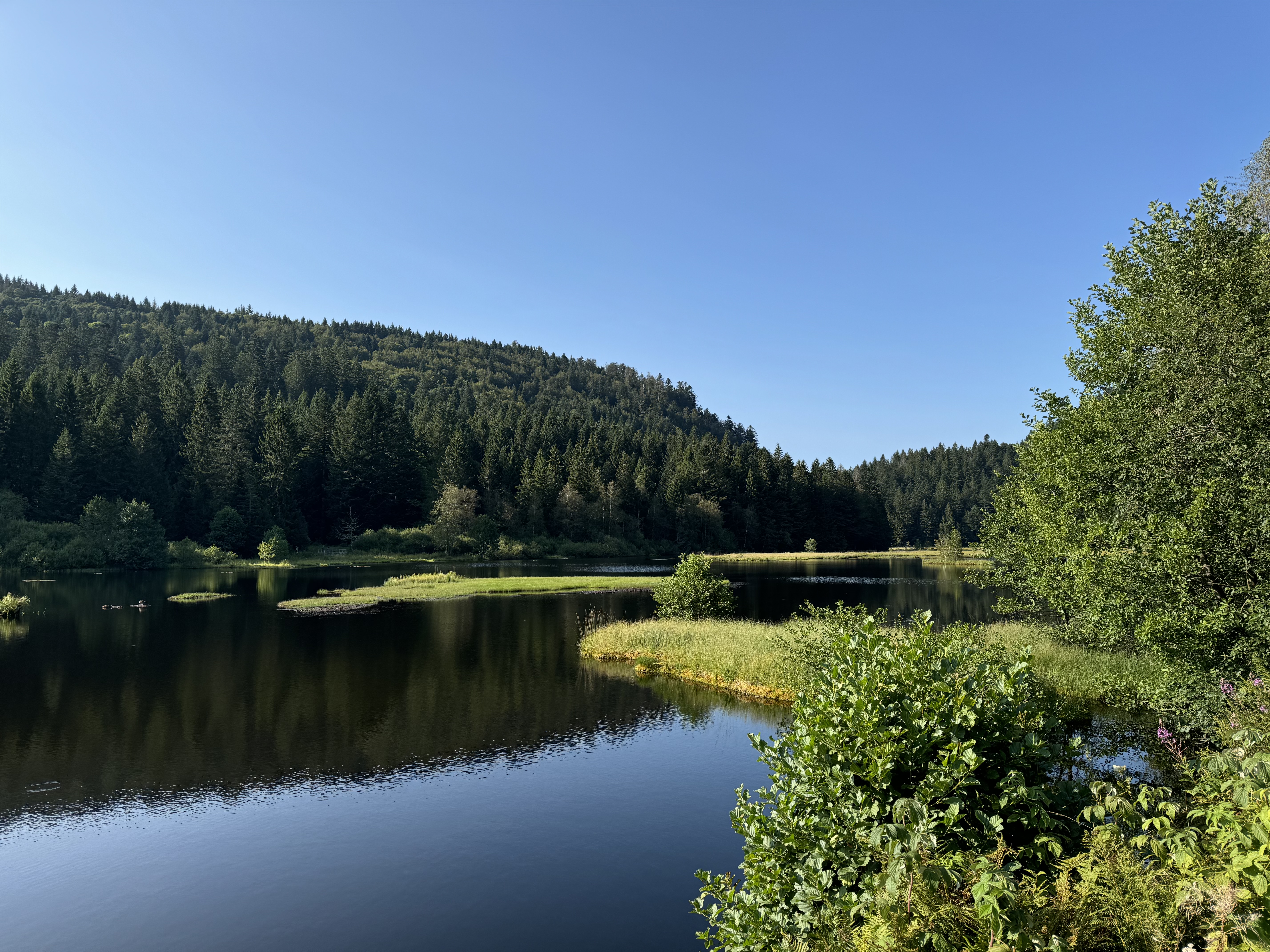
Created in 1989, the Parc naturel régional des Ballons des Vosges covers 2,920 km² across the Vosges, Haut-Rhin, Haute-Saône and Territoire de Belfort. It protects one of the finest mid-mountain massifs in Europe. La Bresse is one of its natural gateways. Here is the guide to understanding and enjoying the park.
Scope and key figures
- 2,920 km², one of the largest French regional parks
- 187 communes across 4 departments
- 256,000 inhabitants
- High point: Grand Ballon, 1,424 m
- More than 5,000 km of marked trails
The big ballons
The massif takes its name from its rounded summits inherited from glacial erosion.
- Hohneck (1,364 m): 360-degree panorama, accessible from La Bresse
- Grand Ballon (1,424 m): high point, view of the Alps in clear weather
- Ballon d’Alsace (1,247 m): legendary cycling pass, see our Ballon d’Alsace cycling guide
- Petit Ballon (1,267 m): Alsatian side, mountain inns
- Ballon de Servance (1,216 m): partly a military zone
Protected fauna and flora
The park is home to emblematic species:
- Chamois, lynx, red deer and roe deer
- Capercaillie, hazel grouse, peregrine falcon
- Pasqueflower, arnica, gentian, sundew
- Beech-fir woodlands unique in France
To dig deeper, see our Vosges wildlife and alpine flowers guides.
Nature reserves inside the park
- Tanet Gazon du Faing (506 ha)
- Frankenthal Missheimle (745 ha)
- Massif du Grand Ventron (1,647 ha)
- Ballons comtois (2,178 ha)
See our dedicated guide to the Tanet Gazon du Faing reserve.
Headline activities
Summer
- Hiking on the GR5
- Mountain and road biking
- Swimming at authorised sites (Gérardmer, Longemer and Lac de la Moselotte); swimming is prohibited at Lispach
- Bilberry and mushroom picking (outside reserves)
Winter
- Alpine skiing (La Bresse Hohneck, Gérardmer, Le Markstein, Ventron)
- Cross-country skiing, snowshoeing
- Sled dogs
Year-round
- Discovery of the mountain inns
- Textile and mining heritage
- Food and drink: munster, tofailles, bilberries
Good to know
- Drones forbidden in the reserves
- Bivouac regulated, generally between 7pm and 9am
- Family picking tolerated outside protected zones
- The park publishes themed maps available at the Maisons du Parc
- Main Maison du Parc in Munster
Gateway villages
- La Bresse: 4-season resort, Lac de Lispach
- Gérardmer: see our Gérardmer pearl of the Vosges guide
- Munster: emblematic cheese-making valley
- Le Thillot: see Le Thillot Hautes Vosges
Plan your stay
To explore the park in depth, base yourself in the heart of the massif. Discover our chalets in La Bresse, the ideal gateway village between Hohneck, Grand Ventron and Ballon d’Alsace.
The La Bresse guide, summer edition
Trails, lakes, blueberries and farm inns, in one free PDF.
Your details are used only to process this request. Privacy policy (in French).
Free PDF, no newsletter sign-up.
Frequently asked questions
What is the difference with a national park?
A regional natural park protects an inhabited territory and its heritage, with looser rules than a national park. Economic activity and tourism remain compatible with conservation.
What are the main ballons (rounded summits)?
The Hohneck (1,364 m), the Grand Ballon (1,424 m), the Ballon d'Alsace (1,247 m), the Ballon de Servance (1,216 m) and the Petit Ballon (1,267 m).
Do you have to pay to enter the park?
No, access is free of charge. Only some nature reserves inside the park have stricter rules.
Can you mountain bike or road cycle?
Yes on authorised trails. Quiet zones and reserves should be avoided. See our mountain biking guide.
Which are the emblematic villages?
La Bresse, Gérardmer, Munster, Le Markstein, Bussang, Le Thillot, Cornimont, Ventron.