
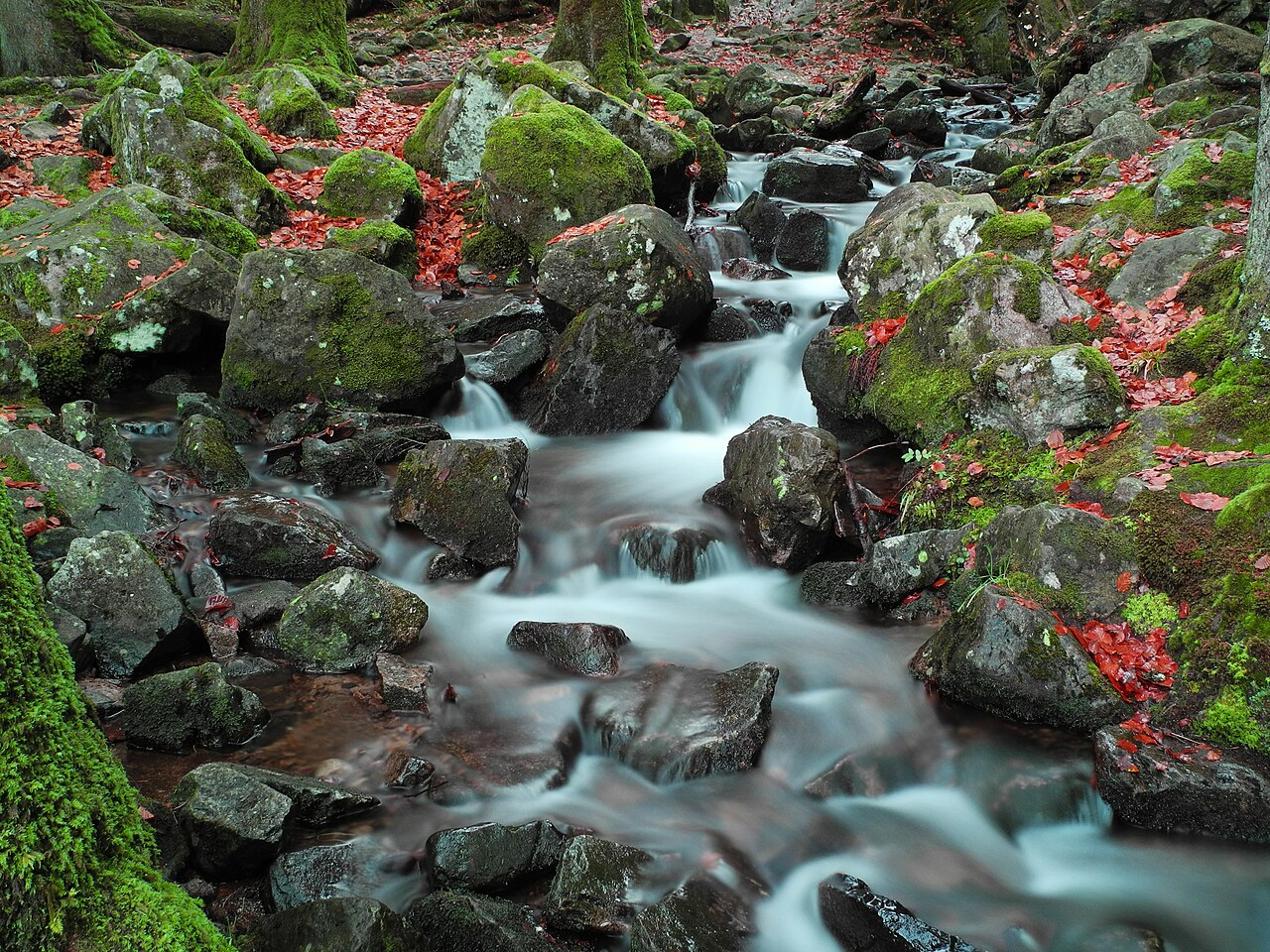
The Cascades de Tendon comprise the Grande Cascade and Petite Cascade in the Vosges forest. Official tourist listings call the first the longest waterfall in the Vosges and give its height as approximately 30 metres.
This page separates a visit to the two waterfalls from the official 7.3 km hike. The distances refer to different routes.
Grande Cascade and Petite Cascade
The Grande Cascade de Tendon drops for around 30 metres. According to the official listing, the Petite Cascade de Tendon is about 1 km, or roughly 20 minutes, from the Grande Cascade.
A forest road also links the two sites. Vosges Tourisme lists self-guided visits, marked trails, pets permitted and coach parking. It does not state a total duration for visiting both waterfalls.
Access to the Tendon waterfalls
The address published by the tourist offices is Route des Cascades, 88460 Tendon.
The official listing gives two options for reaching the Petite Cascade:
- on foot, using a marked trail listed as 2 km;
- on foot from the square in Tendon along the marked trail: since 4 August 2026 a municipal order has banned all motor and electric vehicles from the Petite Cascade, because of the fire risk and repeated breaches of the camp fire ban.
The same listing uses “approximately 1 km” for the distance between the waterfalls and “2 km” for the marked trail. We retain both published figures without turning them into an inferred loop or adding an unverified duration.
A separate official 7.3 km hike
Vosges Tourisme also lists a route called “La Grande Cascade de Tendon” under Le Tholy. This hike is 7.3 km long, has 174 m of elevation gain and is rated easy.
It is not the short link between the Grande and Petite waterfalls. Check the official listing and downloadable route before setting out on the longer hike.
Photography, safety and seasons
Waterfalls are popular photography subjects, but light and ground conditions vary with the weather. Stay on the marked trails and protect equipment around wet ground. The tourist office recommends comfortable hiking shoes because some sections may be damp or slippery.
Its general waterfall guide describes green forest and generous water flow in spring and summer, contrasting colours in autumn and partial ice at some waterfalls in winter. These are seasonal pointers, so check current conditions before travelling.
Explore more of the Hautes Vosges
To compare another waterfall during your stay, read the guide to the Saut des Cuves near Gérardmer. You can also plan a Hohneck hike or a visit to Lac de Longemer.
Official sources and useful links
- Cascades de Tendon listing — La Bresse Hautes Vosges Tourist Office
- Cascades de Tendon listing — Vosges Tourisme
- La Grande Cascade de Tendon hike — Vosges Tourisme
The La Bresse guide, summer edition
Trails, lakes, blueberries and farm inns, in one free PDF.
Your details are used only to process this request. Privacy policy (in French).
Free PDF, no newsletter sign-up.
Frequently asked questions
How high is the Grande Cascade de Tendon?
The official tourist listings describe a drop of approximately 30 metres.
How do you reach the Petite Cascade de Tendon?
The official listing places it about 1 km, or roughly 20 minutes, from the Grande Cascade. It also gives a marked trail listed as 2 km. Since 4 August 2026 the commune has banned all motor and electric vehicles from the Petite Cascade: park on the square in Tendon and finish on foot along the marked trail.
Where are the Tendon waterfalls?
The published address is Route des Cascades, 88460 Tendon.
Is the 7.3 km hike simply the link between the two waterfalls?
No. It is a separate official hike of 7.3 km with 174 m of elevation gain, rated easy. The link between the Grande and Petite waterfalls is described separately.