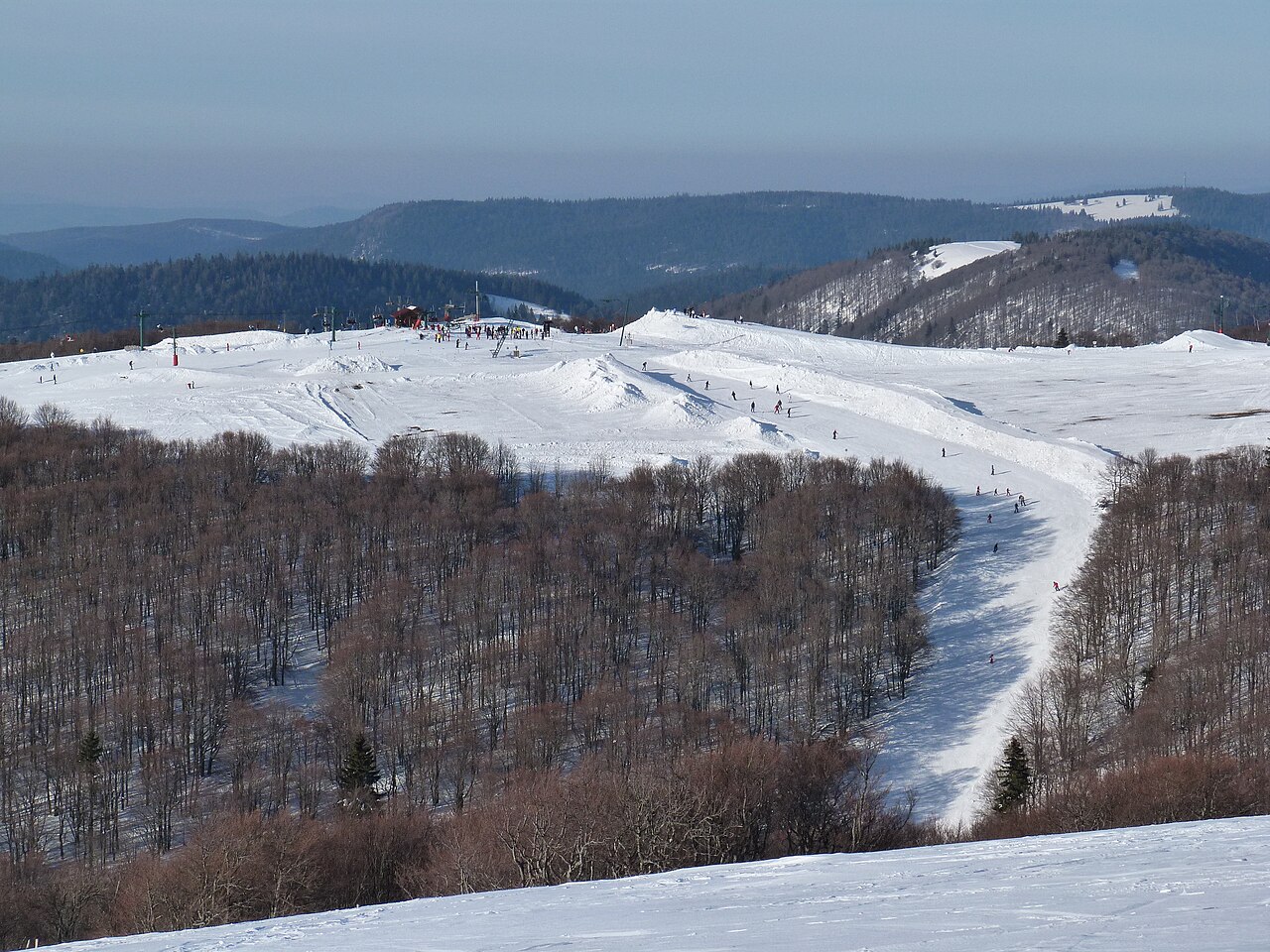
La Bresse is one of the best French resorts for learning to ski: gentle runs, dedicated beginner zones, well-known schools and prices softer than in the Alps.
Beginner zones
The Vologne sector has a secure snow garden with magic carpets, cones and small playful slaloms. The Lispach domain also has a gentle learning zone at a soft price, ideal for the first few days.
Choosing a school
- ESF (French Ski School): the best-known, group and private lessons, snowflake grading, structured teaching.
- ESI (International Ski School): often more playful teaching, smaller groups.
- Independent instructors: for tailor-made one-on-one lessons.
How to choose your course
Several factors guide the choice:
Age group: groups are formed by age band, not just skill level. An adult beginner will not be mixed with 8-year-olds, even if they share the same technical level. This matters for progression and motivation.
Level: the first contact with an instructor or the online registration includes a level assessment. Do not overestimate your level: it is better to start in a “complete beginner” group and move up after two days if you progress quickly, than to end up in a group that is too advanced.
Morning or afternoon: mornings (9am-12pm) offer firmer, colder snow, better for skiing. Children are often more focused in the morning. Afternoons (2pm-5pm) suit families who want a relaxed lunch and have small children who nap.
Adult beginners: it is never too late
The ESF in La Bresse offers specific adult beginner courses, separate from children. An encouraging reality: dozens of adults between 30 and 60 learn to ski every winter in La Bresse.
Contrary to popular belief, adults progress faster than children in the first hours: they understand instructions immediately, anticipate risks better and have a stronger base balance.
What takes longer for adults: overcoming the fear of falling and releasing physical tension. A relaxed adult progresses as fast as a 10-year-old.
In 6 half-days in La Bresse, a motivated adult beginner can reach a level that lets them enjoy long green runs independently.
Ski or snowboard: which to choose as a beginner?
| Criterion | Ski | Snowboard |
|---|---|---|
| First days | More intuitive (two feet free) | Harder (frequent falls at the start) |
| Mid-term progression | Steadier learning curve | Fast progression after 3-4 days |
| Lifts | Easy (all lift types) | Easy on chairlifts, hard on drag lifts |
| Build | Works for everyone | Advantage for lighter, more flexible people |
| Terrain versatility | Excellent everywhere | Less comfortable on flat sections |
Our advice: for a one-week stay, skiing delivers a better overall experience for a beginner who wants to enjoy the slopes from day one. Snowboarding requires accepting 2 difficult days before it starts feeling good.
The progression steps
The ESF uses a star-based progression system:
- Snowflake: first snowplough turns, controlled stop, first drag lift or carpet
- 1st star: parallel turn initiated, ability to ski long green runs independently
- 2nd star: linked parallel turns, blue runs, first small bumps
- 3rd star: confirmed technique, red runs accessible, short and long turns mastered
Each star corresponds to 3 to 6 days of practice depending on the skier. The 1st star is achievable in a week for a motivated adult.
After lessons: consolidating on your own in the afternoon
Morning lessons finish around 12pm. The afternoon is ideal for building on what you have learned independently:
Recommended beginner runs in La Bresse:
- The green runs in the Vologne sector: long, wide, quiet on weekdays
- Returns from the main chairlift on the gentlest slopes
- Avoid red and black runs until at least the 3rd star
Tips for progressing on your own:
- Repeat the exercises from the morning (target turns, weight on the downhill ski)
- Ski slowly: speed is not progression
- Take breaks every 45-60 minutes to avoid the muscle fatigue that causes falls
Beginner gear: rent rather than buy
Why renting is better to start:
- Rental skis are set and tuned to your level and weight, which is crucial for safety (binding release)
- No investment before you know if you really enjoy skiing
- Rental kit includes boots, poles and skis: a saving of 300 to 500 euros
- If you progress quickly, the rental shop can adjust ski length mid-week
When to buy: once you have confirmed your 2nd star level and commit to a minimum of 2 ski weeks per year. Best deals come at end of season (March-April) or at club second-hand sales.
Typical first-week budget
- Kid’s week pass: around €160
- Weekly gear rental: €80 to €110
- ESF 6-morning course: €150
- Ski insurance: €30
That’s around €430 to €450 all-in per child, on top of accommodation.
Falls and injuries: reassuring figures
Skiing is often perceived as dangerous by non-skiers. The statistics are more reassuring than expected:
- The overall injury rate in alpine skiing is around 2 to 3 injuries per 1,000 skier days
- Beginners are paradoxically less affected than intermediate skiers (low speed, smooth green runs)
- Most beginner injuries involve wrists (reflex to catch a fall with the hands) and knees (during rotating falls)
Recommended protection for beginners:
- Wrist guards (essential for snowboarding, very useful for beginner skiers too)
- Knee/thigh protection: optional but appreciated for children and adults with previous injuries
- Helmet: compulsory for children, strongly advised for adults. Rental shops offer helmets to hire.
The most effective protection remains good technique: learning to fall in a “tuck and roll” and never trying to catch yourself with your hands.
The tips that make the difference
- Book lessons 2 months ahead during school holidays
- Prefer mornings when the snow is fresh and firm
- Break every 90 minutes to avoid tired-legs falls
- Cover up: SPF 50, goggles or sunglasses, waterproof gloves
For accommodation, a chalet with outdoor space to clip into skis makes life massively easier with young beginners.
Around the slopes
Family ski trip? Browse our family-friendly chalets, with space for gear and kids.
Frequently asked questions
What age can kids start skiing?
ESF's snow gardens welcome kids from age 3. Before that, sticking to sledging is wiser. From 5 or 6, technical learning becomes more effective.
How much is an ESF group course in La Bresse?
Around €140 to €170 for a 6-session course (Flocon to Étoile d'or class), cheaper outside school holidays.
Which school is best for beginners?
ESF is the classic choice with structured grading. ESI runs smaller, often more playful groups. For custom one-on-one, independent instructors are worth considering.
Is La Bresse really beginner-friendly?
Yes: dedicated beginner zones with carpets in Vologne, gentle green runs, two schools, and prices noticeably softer than in the Alps.
Your request has been sent
We will reply within 48 hours with the relevant contact or practical information.
Planning an activity? Ask about availability
Tell us what you have in mind in under a minute. We will direct you to the right local contact.